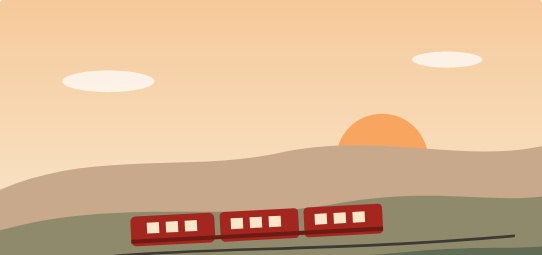
The first train of the morning leaves while the station lights are still on. It is short: three carriages, mostly locals carrying flasks of coffee, the occasional walker with a rucksack between their knees, and a few travellers who have heard about the stop and can scarcely believe it.
About halfway along the line, where the track curves around the hillside, the train slows and finally comes to a complete halt. There is no platform, sign or announcement here, just a brief, friendly word from the driver. Everyone knows what comes next.
The valley below is still in shadow. Then sunlight reaches the distant ridge, slips down the slopes and spills across fields and rooftops, one after another. Faces gather at the east-facing windows. Someone always forgets to take a photograph because they are too busy looking.
When the pause became a tradition
Nobody seems to know exactly when the pause began. Some regular passengers believe a driver started doing it on quiet mornings years ago and the habit simply stuck. Others think the timetable was gently extended to allow for it. However it began, those few minutes are now part of the journey, not a delay.
Commuters who take the line every day say they still look up. Visitors usually board with their phones ready and leave with them tucked away.
Then the brakes hiss, the carriages give a gentle jolt and the train carries on up the hill: a little late, and nobody minds.